
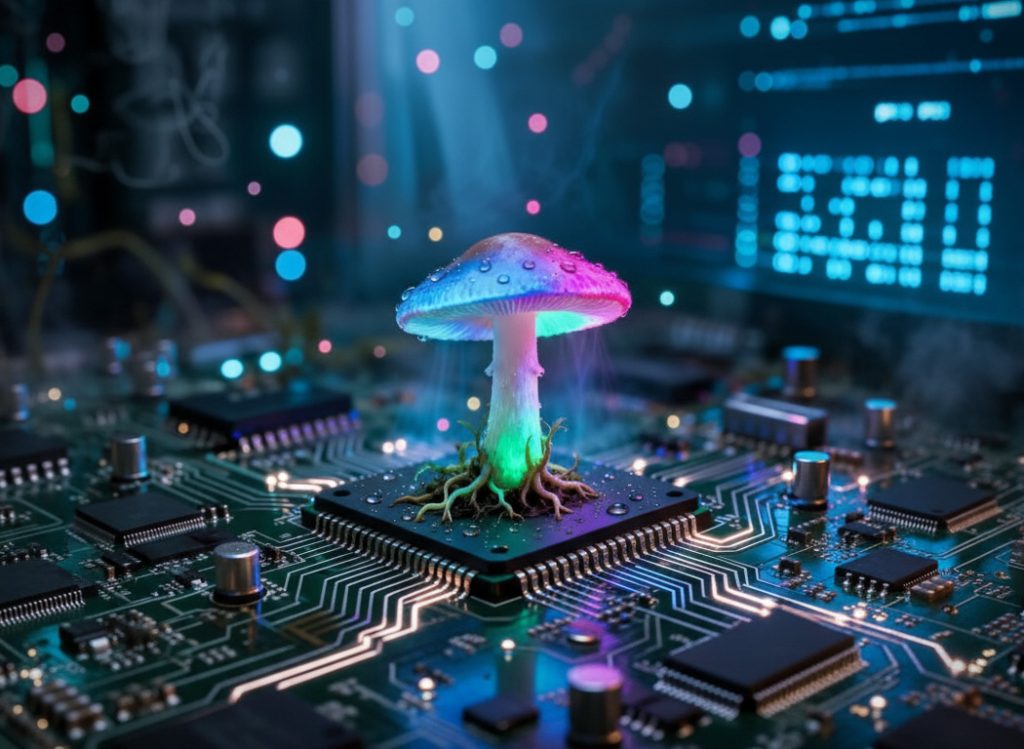
Eco-Friendly Computer Memory Made from Shiitake Mushrooms 🌱💾
What Is Mushroom Mycelium and Why Does It Matter?
The mycelium of mushrooms is a root-like network of fibers capable of transmitting electrical signals, similar to neural pathways in the brain. Researchers have used the mycelium of the shiitake mushroom to create working memory elements that can store information based on past electrical activity — a concept known as a memristor.
The “Mushristor”: Nature’s Own Memory Device
These fungal memory elements, nicknamed the Mushristor, demonstrated a switching frequency of around 5,850 hertz with about 90% accuracy. That’s comparable to early silicon-based memristors, but entirely organic and biodegradable — made from living materials rather than mined minerals.
Benefits of Green Computing
- Environmentally friendly and fully biodegradable
- Reduces reliance on silicon and rare-earth metals
- Potential for low-cost and scalable production
- Inspired by natural biological systems
Challenges and Current Limitations
Despite its promise, mushroom-based memory technology is still in the early laboratory phase. The speed and stability of these biochips remain lower than traditional silicon chips. Extensive research is required to improve durability, consistency, and data retention before commercial applications become viable.
The Future of Biodegradable Computing
This discovery opens a new chapter in biocomputing — the fusion of nature and technology. Imagine future devices grown instead of manufactured, designed to return harmlessly to the earth after use. Shiitake-based memory chips may be the first step toward a truly sustainable computing revolution.